How to record a parent's life story, one conversation at a time
TL;DR
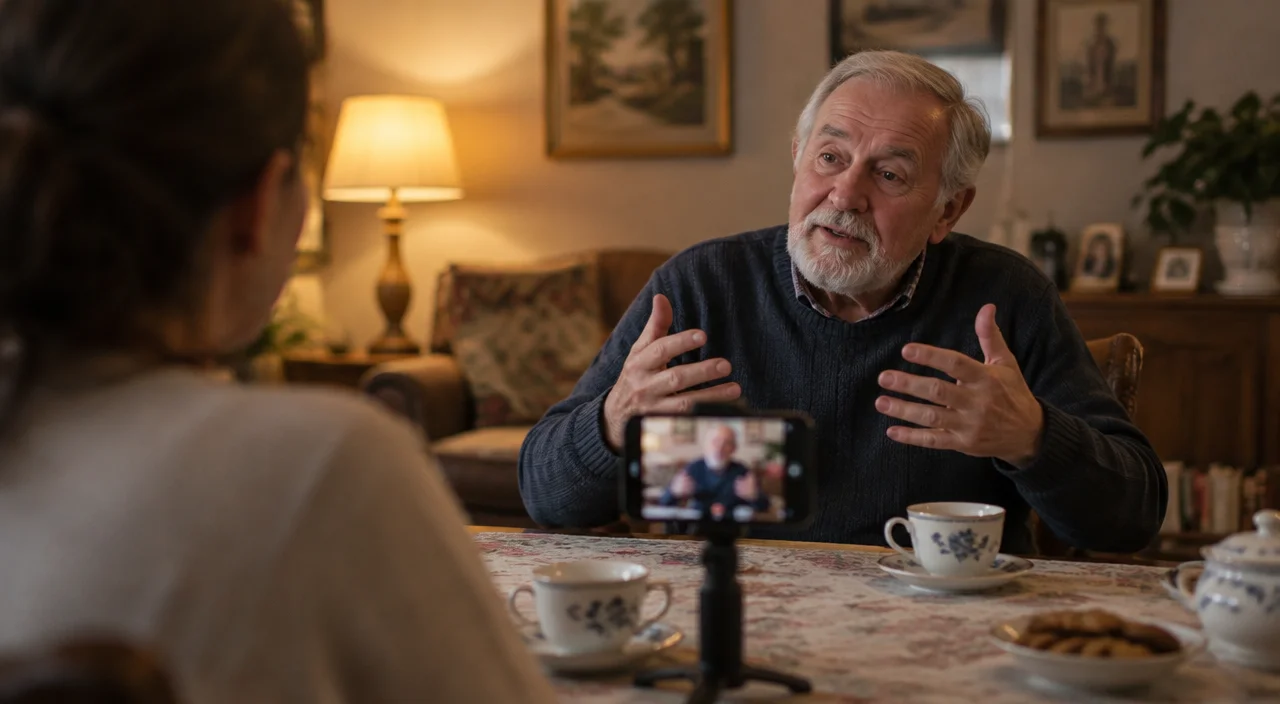
The easiest way to record a parent's life story is to stop thinking of it as a project. Instead, have short conversations, about an hour each, once a week or once a month. Record them on your phone, ask one theme per session, and write down the best stories afterwards. After a few months you'll have more than most families ever save.
The easiest way to record a parent's life story is to stop thinking of it as a project. Instead, have short conversations, about an hour each, once a week or once a month. Record them on your phone, ask one theme per session, and write down the best stories afterwards. After a few months you'll have more than most families ever save.
Why short sessions work
Long interviews are tiring for both of you, and memories come back slowly. When people know there will be another conversation next week, they often spend the days in between remembering. Many of the best stories come at the start of the second or third session: "I thought of something after you left last time."
Pick a theme for each session
A theme gives the conversation a shape without making it feel like an exam. Some good ones:
- The house you grew up in
- Your parents and grandparents
- School and friends
- Your first jobs
- How you met Mum or Dad
- The year we were born
- Holidays and traditions
- Hard times and how you got through them
- What you're proud of
Our list of questions to ask your parents and grandparents has ideas for each of these.
Set up simply
- Use your phone's voice recorder. Put it on the table between you, not in your hand.
- Choose a quiet room. Turn off the TV and radio. Background noise makes recordings hard to listen to later.
- Sit side by side with photos, if you have them. Looking at pictures together feels less formal than sitting face to face.
Let them wander
If a question about school turns into a story about a neighbour's goat, let it. The detours are often the best part. Your list of questions is a starting point, not a script.
Listen more than you talk
It's tempting to fill silences. Don't. A pause often means someone is remembering. Count to five in your head before you ask the next question.
Write it down soon
After each session, while it's fresh, write down the two or three best stories in your own words, along with any names, dates and places. A recording is a treasure, but written stories are what people actually read and pass on.
Don't wait for the perfect moment
Many people mean to do this "one day" and then find they've waited too long. One conversation recorded this month is worth more than a beautifully planned project that never starts.
If you'd like the writing part done for you, Vibitely's Life Story lets you type in your parent's answers to a guided interview and turns them into readable chapters, a website the family can share, and a book you can print.