How to collect memories from family for a memorial or a life story
TL;DR
The easiest way to collect memories from family is to ask each person for one thing: one story, one photo, or one detail. Small, specific requests get answers; "send me your memories of Dad" often doesn't. Give people a simple way to reply, a rough deadline, and a reminder a week later.
The easiest way to collect memories from family is to ask each person for one thing: one story, one photo, or one detail. Small, specific requests get answers; "send me your memories of Dad" often doesn't. Give people a simple way to reply, a rough deadline, and a reminder a week later.
Why ask others at all
Each person knew a different side of someone. A daughter remembers bedtime stories. A colleague remembers the time he stayed late to help a stranger. A school friend remembers the boy before anyone else knew him. Put together, these memories make a much fuller picture than any one person could write.
Make the request small
Instead of a big open question, try:
- "What's one story about Grandma that always makes you smile?"
- "Do you have a photo of Uncle Petras from before 1980?"
- "What was the first thing you noticed about her when you met?"
- "What did he always say?"
One question per person is plenty. People who want to say more will.
Make it easy to answer
Let people reply in whatever way suits them:
- a message or email
- a voice note, for those who'd rather talk than type
- a phone call, where you take notes
- a photo of a handwritten note
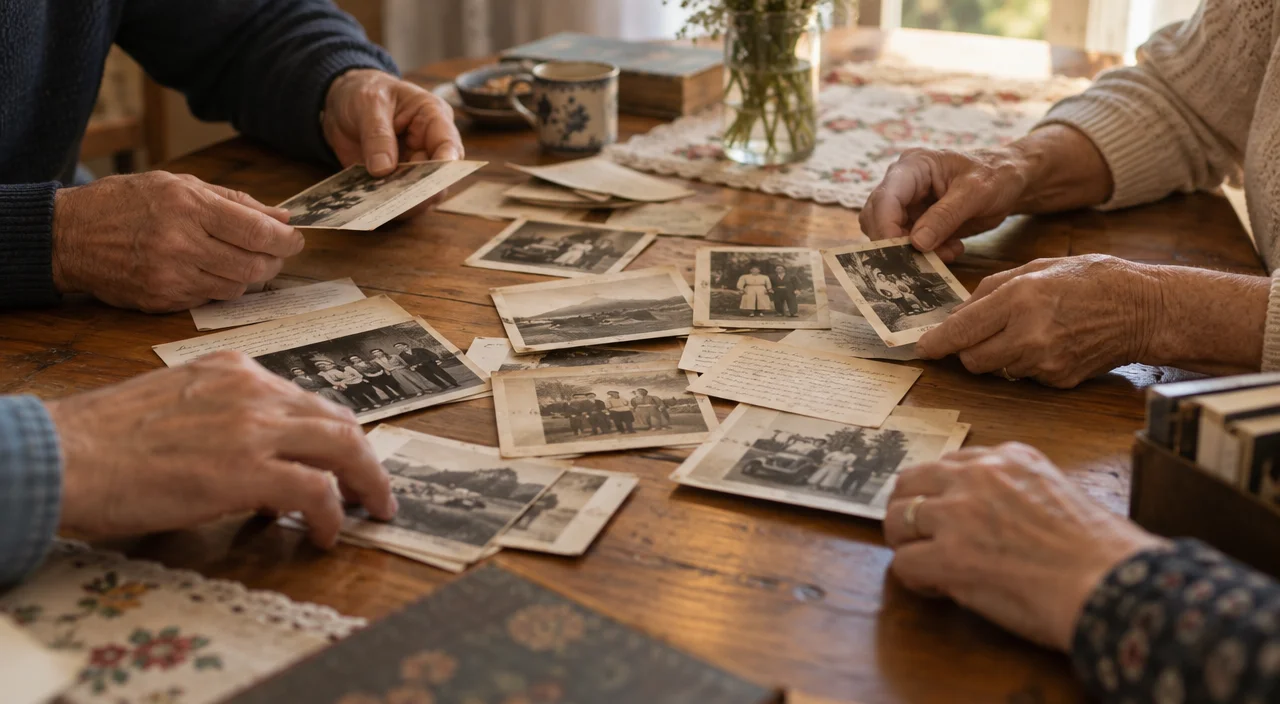
For older relatives, a visit with a few photos on the table usually works better than any message.
Collect photos carefully
Ask people to send photos as files if they can. If they only have prints, offer to borrow them for a week and copy them yourself, using our guide on scanning old photos with your phone. Always return originals, and say when you will.
Ask for the "who, where and when" with each photo. It's much harder to find out later.
Keep a simple list
As answers come in, keep one list with:
- who sent what
- the story or detail, in their words
- names, dates and places mentioned
This makes it much easier to write later, and to thank everyone.
Be gentle with timing
After a death, some people want to share straight away and others need months. It's fine to collect memories over time. A memorial page or a life story can grow; it doesn't have to be finished in a week.
Give credit
When you use someone's story, say who it came from: "As his friend Algis remembers..." People like seeing their memory included, and it shows readers how many lives the person touched.
Where to put it all
For someone who has died, an online memorial page is a natural home, with a guestbook where people can add memories themselves. Vibitely's In Memory of has one built in, and it's free to create.
For a living parent or grandparent, the memories can become part of a life story. Vibitely's Life Story lets you type in answers as you collect them and turns them into chapters and a printable book.