How to scan old photos with your phone
TL;DR
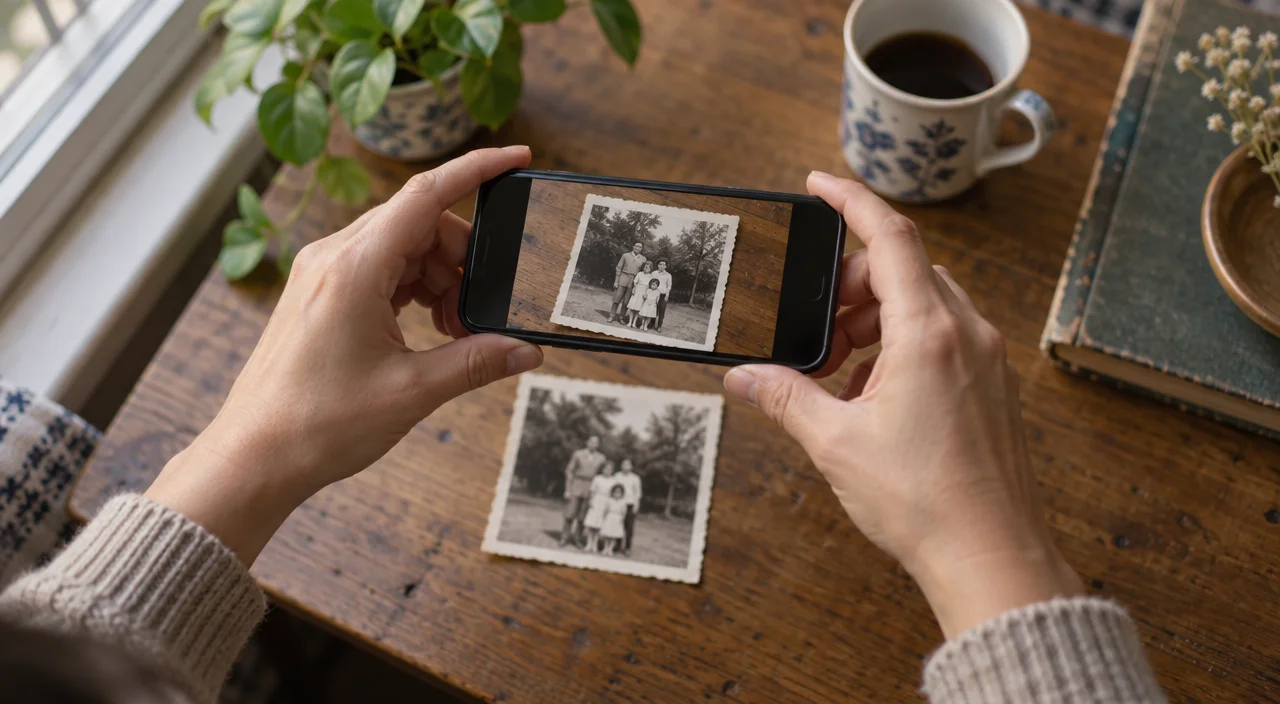
You can make good copies of old photos with nothing more than your phone. Take the photo out of its frame or plastic sleeve, put it flat in soft daylight, hold the phone straight above it and fill the screen with the print. That's most of it.
You can make good copies of old photos with nothing more than your phone. Take the photo out of its frame or plastic sleeve, put it flat in soft daylight, hold the phone straight above it and fill the screen with the print. That's most of it.
The details below make the difference between a copy you can use and one with glare, blur and a tilted edge.
Find soft, even light
The best light is daylight from a window on a cloudy day, or a room in the shade on a sunny one. Direct sun makes harsh bright spots. A ceiling lamp right above you makes your own shadow fall on the photo.
Turn the flash off. On a glossy print, the flash bounces straight back into the lens and leaves a white patch that no restoration can fully fix.
Take the photo out of the glass
Glass in frames and the plastic in old albums reflect everything in the room. If you can safely take the print out, do. If the photo is stuck to an old "magnetic" album page, don't pull it, as that can tear it. Photograph it where it is and tilt the album slightly away from the window until the shine disappears.
Hold the phone straight
If the phone is tilted, the photo comes out as a trapezoid instead of a rectangle. Hold the phone flat, parallel to the table, right above the middle of the print. Many phones show a small level or a grid in the camera settings, which helps.
A simple trick: rest your elbows on the table. It steadies your hands more than you'd expect.
Fill the frame
Move the phone close enough that the print fills most of the screen, but not so close that the camera can't focus. Tap on the photo on screen to focus. Don't use the digital zoom, because it only crops the picture and throws away detail.
Take two or three shots
Small movements cause blur you won't notice on the phone screen. Take a few shots of each print and keep the sharpest one. It costs nothing.
Copy the back too
The back of an old photo often has a date, a place or a name written in pencil. Photograph it as well and keep the two images together. In twenty years, that handwriting may be the only record of who is in the picture.
Name the files as you go
"IMG_4382" means nothing. Rename the best shot of each print with what you know, for example "1958 grandma Ona wedding Kaunas". If you're working through a whole box, it's easier to do it in small batches than to leave it all for the end.
Then what?
A careful phone copy is good enough to share, to print at the same size and to restore. If the print is faded, torn or covered in small scratches, a restoration tool can bring a lot of it back. You can restore an old photo online with Vibitely, and the first one is free.
Keep the original print, even after you have a good copy. A digital file can get lost when a phone breaks, and a paper print kept in a dry, dark place can last another hundred years.