Should you colourize black-and-white family photos?
TL;DR
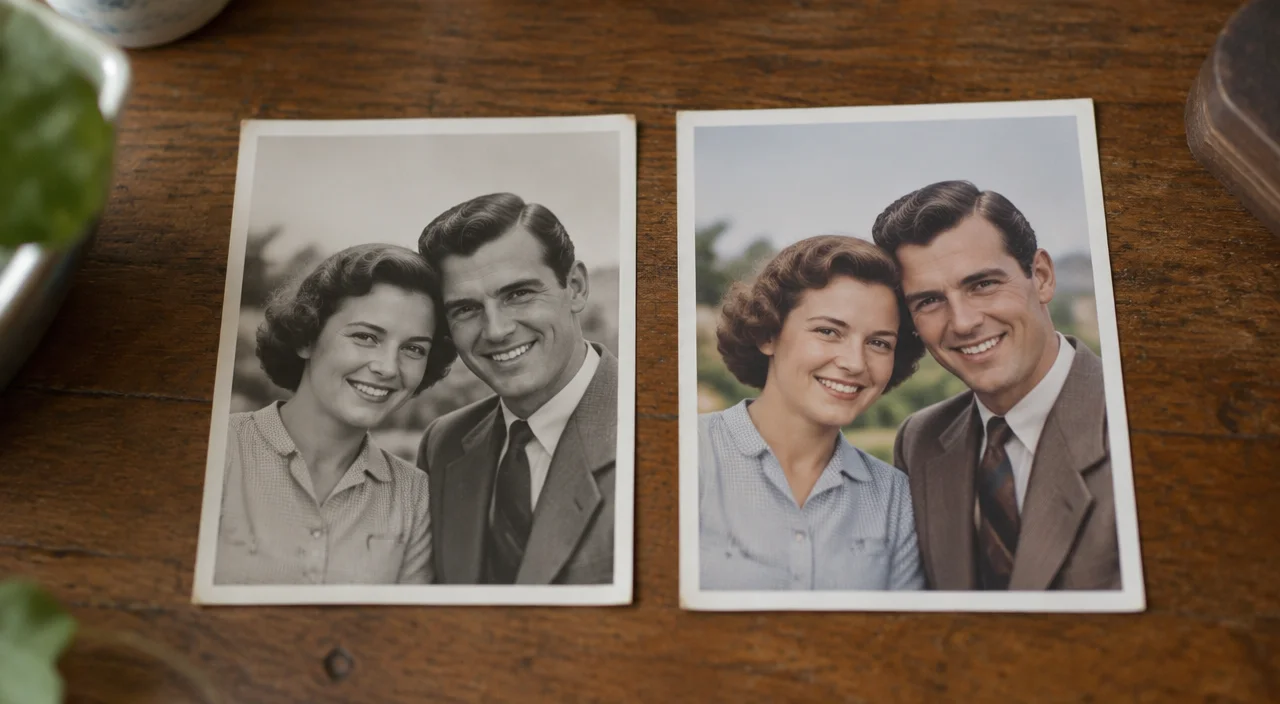
Colourizing can make an old family photo feel suddenly close, as if the people in it could step out of the frame. But the colours are always a guess: nobody knows the true colour of your greatgrandmother's dress. The best approach is to keep the blackandwhite original and treat the colour version as an extra, not a replacement.
Colourizing can make an old family photo feel suddenly close, as if the people in it could step out of the frame. But the colours are always a guess: nobody knows the true colour of your great-grandmother's dress. The best approach is to keep the black-and-white original and treat the colour version as an extra, not a replacement.
What colourization does well
It makes faces feel real. Skin tones and eye colours make people look like people we might meet, rather than figures from a history book.
It helps younger family members connect. Children often find black-and-white photos distant. A colour version can start the conversation that leads to the stories.
It brings out details. Sometimes adding colour makes it easier to see things that were hard to notice before, like a pattern on a dress or the shape of a building in the background.
Where it goes wrong
Wrong colours. A blue uniform might come out green. A red flag might come out brown. If the colour of something matters, such as a military uniform or a traditional costume, check it against what you know, and say on the image that the colour was added later.
Too much colour. Strong, saturated colours look fake. Natural, soft colours usually look more believable.
Lost character. Some photos are simply better in black and white. Portraits with strong light and shadow can lose their mood in colour.
Restore first, then colour
If a photo is faded, scratched or torn, restore it first. Colour added to a damaged photo makes the damage more obvious. A good order is: copy the print, restore the damage, then add colour if you want it.
Keep both versions
Always keep the black-and-white version as the "real" one. If you share the colour version, it's kind to say so, for example "colour added in 2026". It saves future family members from thinking the colours are original.
When to choose colour
Colour is a good choice for:
- a portrait for a memorial page or a family gathering
- photos for children and grandchildren
- pictures where the colour isn't important to the story
Black and white is often better for:
- documents and official photos
- photos where accuracy matters, such as uniforms
- portraits with strong, dramatic light
Trying it
Vibitely's Family Album restores faded and damaged prints and lets you add natural colours as an option, so you can compare both and decide which you prefer. The first restoration is free.
Whatever you choose, write down who is in the photo and when it was taken. The names matter more than the colours.